Visual series
4 slides, in Turkish · Instagram
Neurodiversity
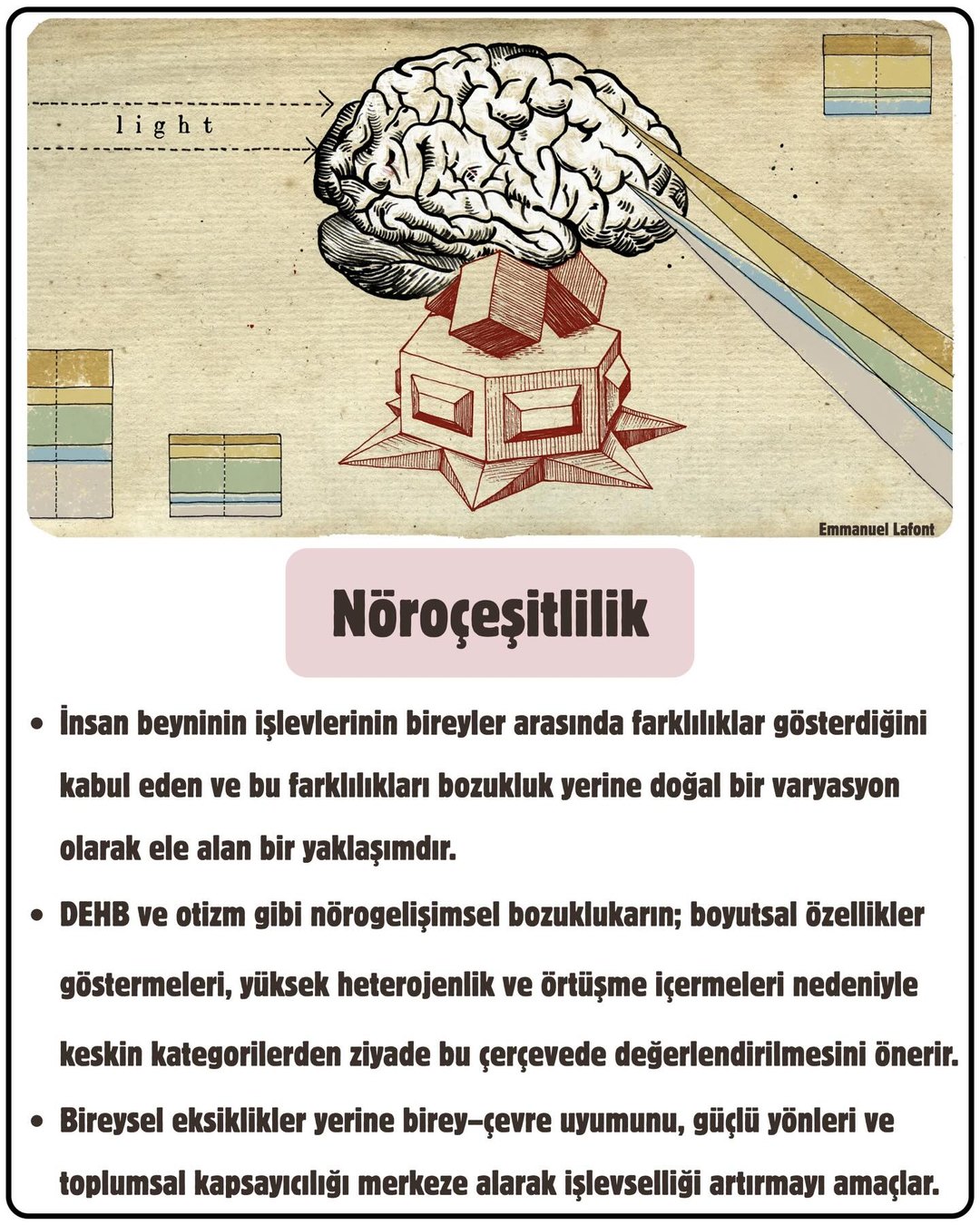
- An approach that accepts that brain function differs from person to person, and treats these differences as natural variation rather than disorder.
- Neurodevelopmental conditions such as ADHD and autism are dimensional, highly heterogeneous and overlapping. The approach therefore suggests viewing them within this frame rather than as sharp categories.
- It aims to improve functioning by focusing on person–environment fit, strengths and social inclusion, rather than on individual deficits.
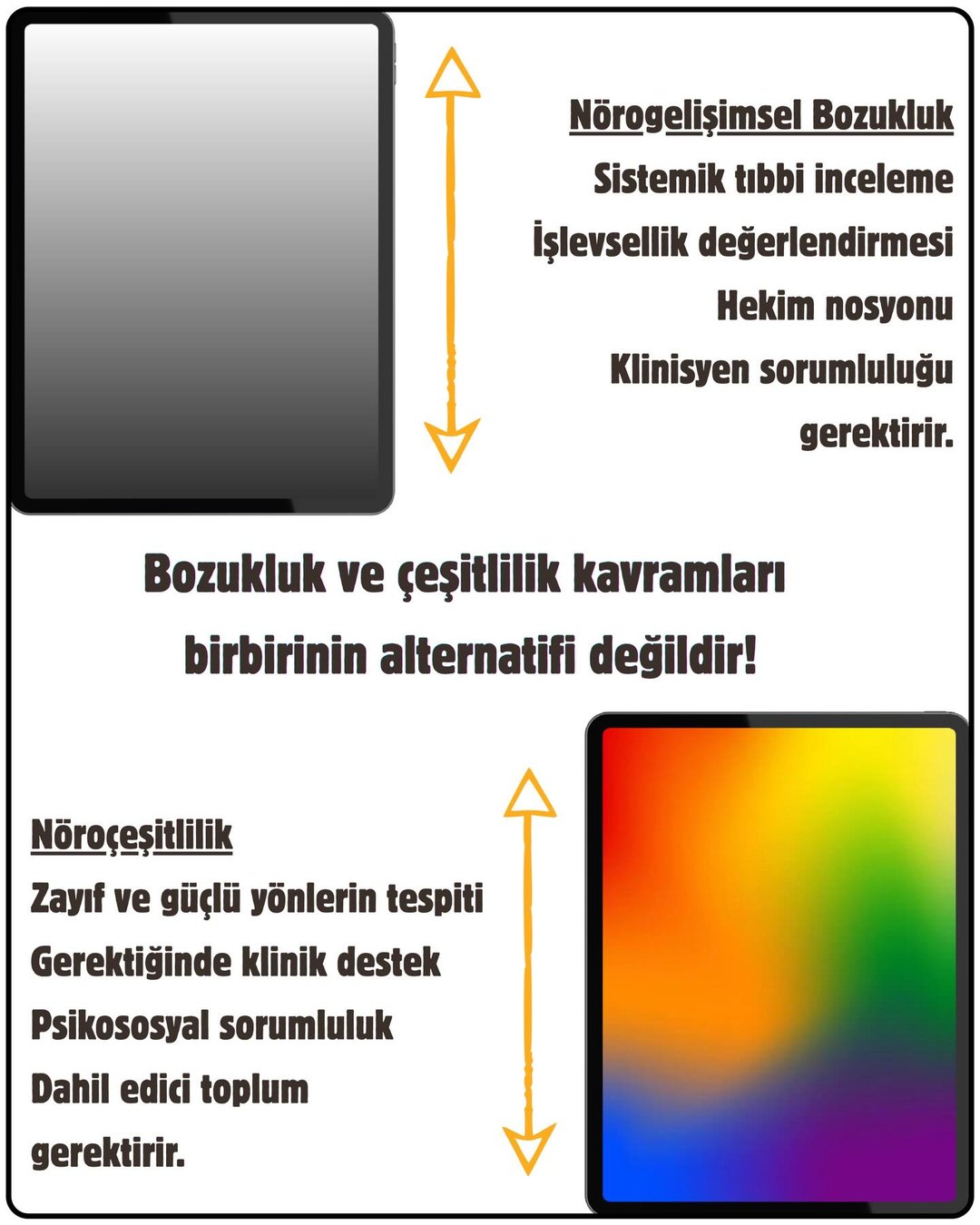
Disorder and diversity are not alternatives
Neurodevelopmental disorder
calls for
- A systematic medical assessment
- An assessment of functioning
- Medical judgement
- Clinician responsibility
Neurodiversity
calls for
- Identifying weaknesses and strengths
- Clinical support when needed
- Psychosocial responsibility
- An inclusive society
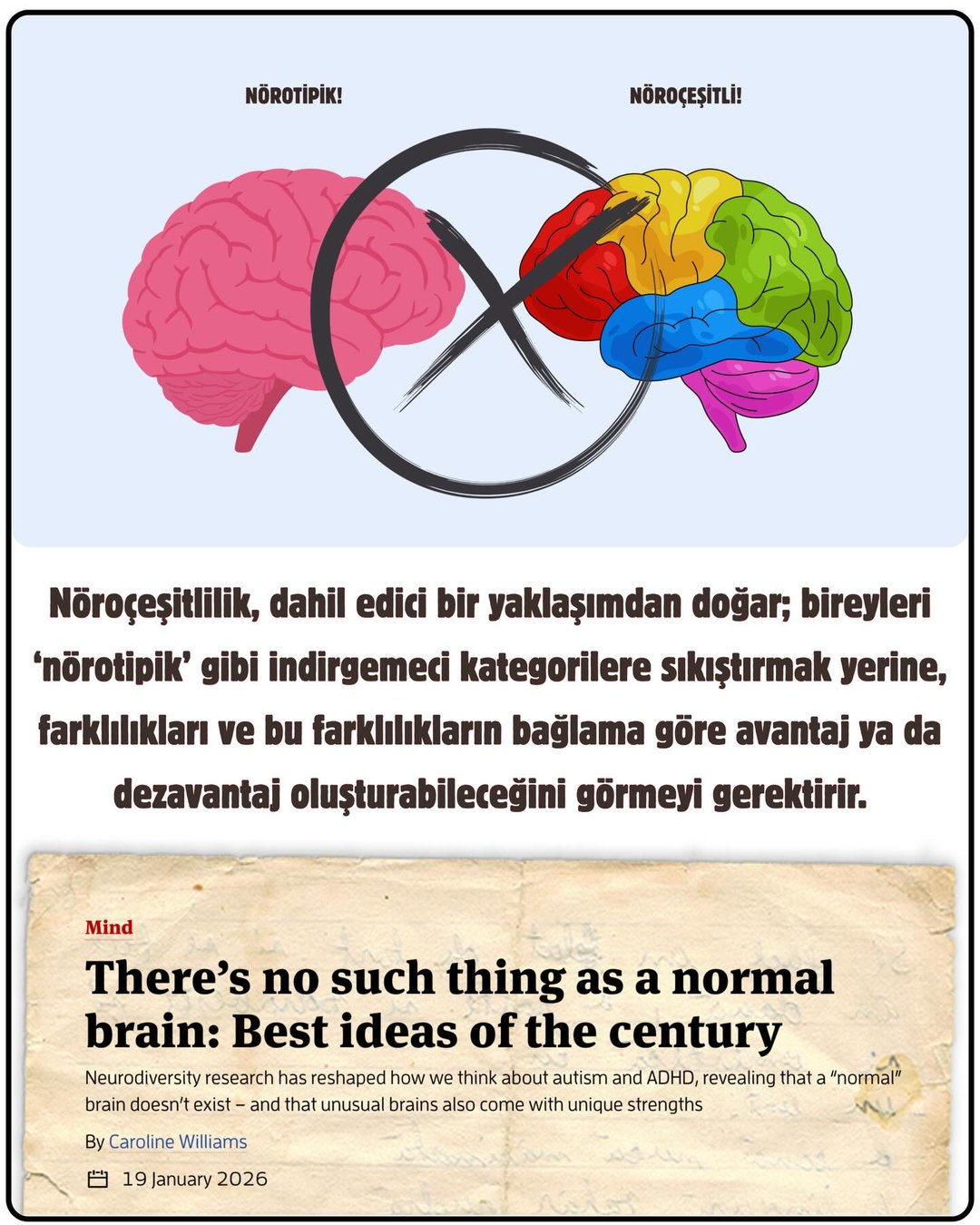
Neurodiversity grows out of an inclusive approach. Instead of fitting people into reductive categories such as ‘neurotypical’, it asks us to see differences, and to see that the same difference can be an advantage or a disadvantage depending on the context.
Source: Williams. New Scientist, 2026
Adapted from an Instagram series (in Turkish). General information only; it does not replace a medical assessment.