Visual series
6 slides, in Turkish · Instagram
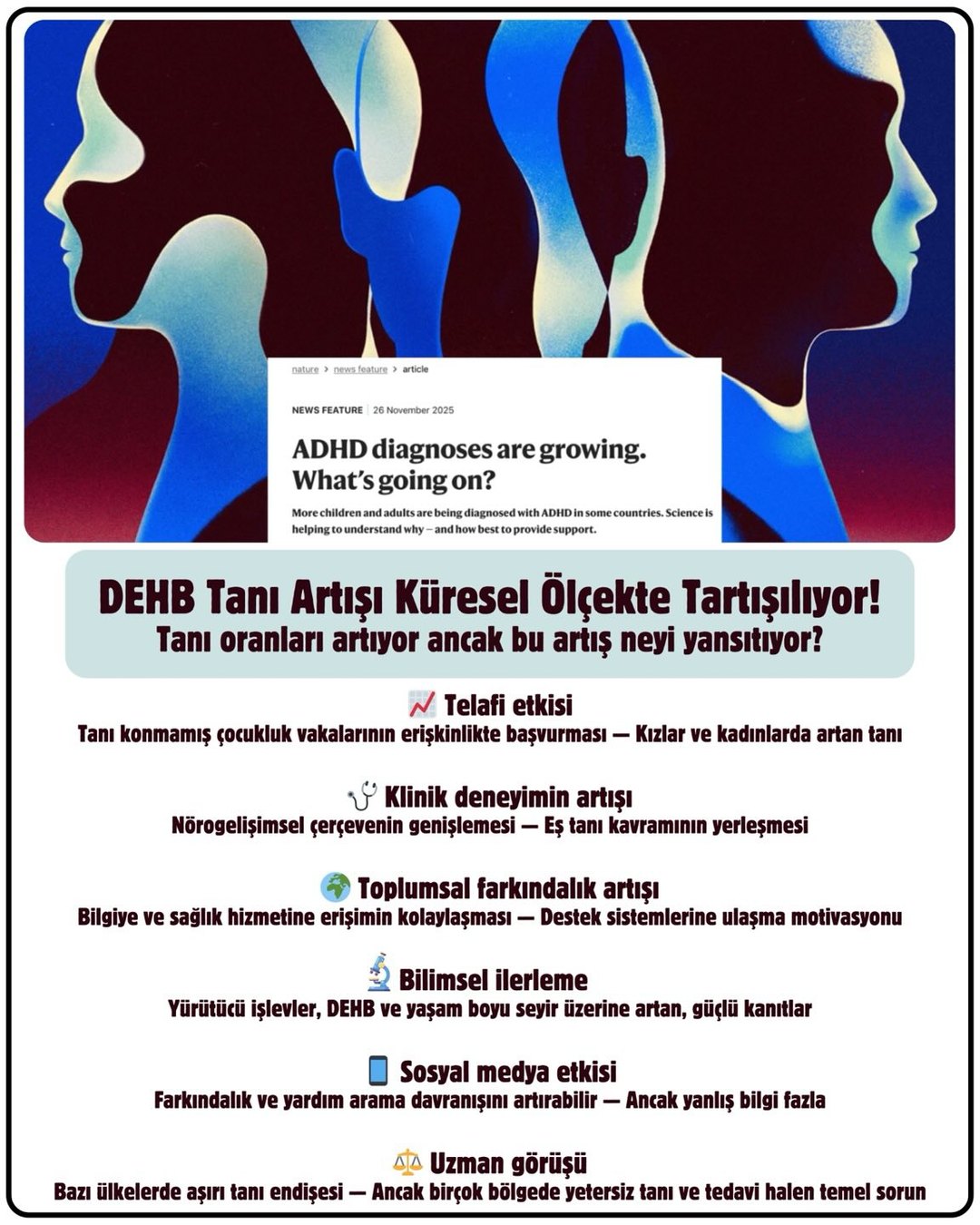

Rising ADHD diagnoses are debated worldwide
Diagnosis rates are rising. What does this rise reflect?
- Catching up
- People missed in childhood are seeking help as adults, and more girls and women are being diagnosed.
- Growing clinical experience
- The neurodevelopmental framework has broadened and the idea of co-occurring conditions is now established.
- Public awareness
- Information and health services are easier to reach, and more people want to access support.
- Scientific progress
- Strong evidence on executive functions, ADHD and its lifelong course keeps growing.
- Social media
- It can raise awareness and help-seeking, but misinformation is also common.
Source: Nature, 2025
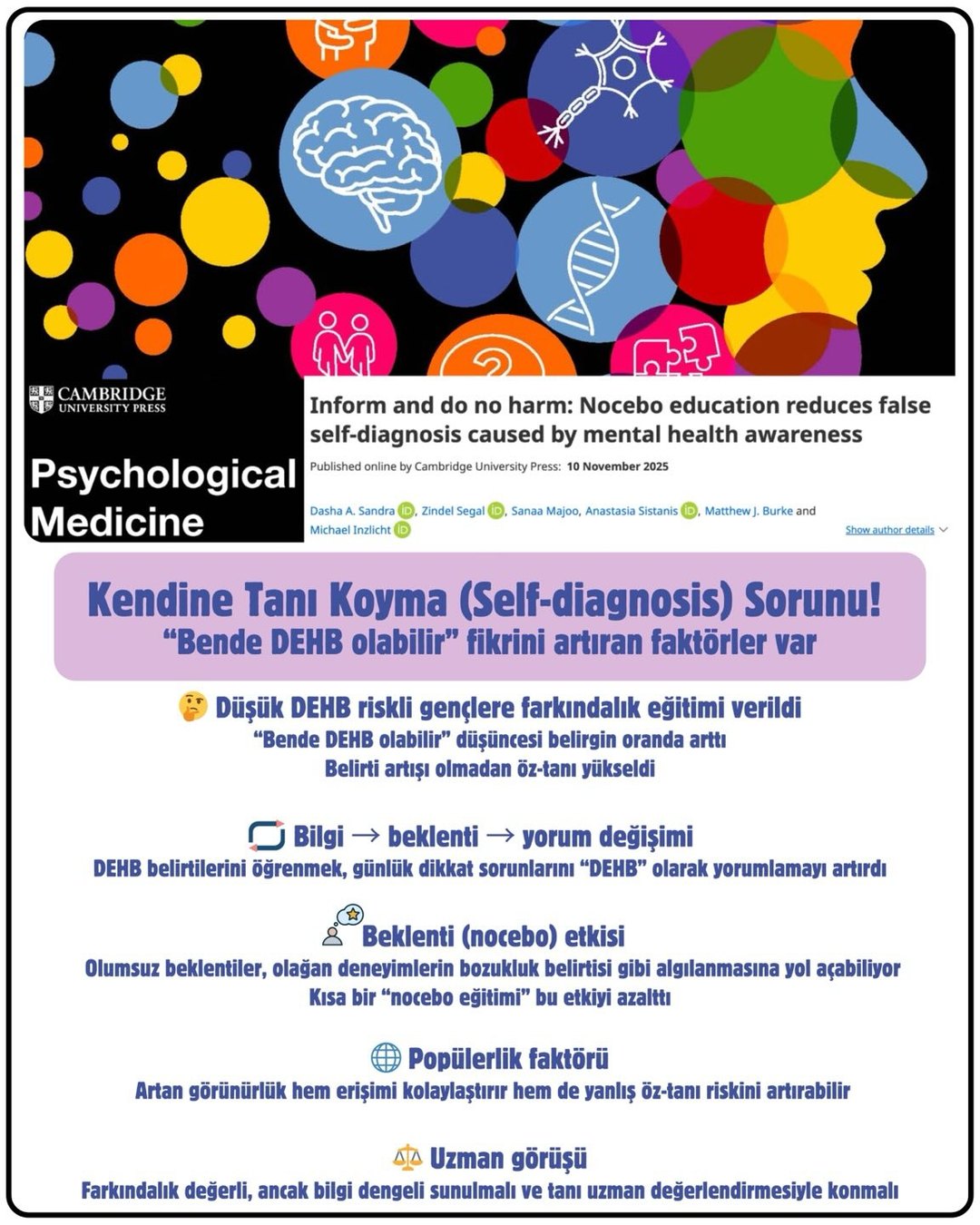
The problem of self-diagnosis
Some factors make the thought “I might have ADHD” more likely.
- An awareness workshop
- When young adults at low risk of ADHD attended an awareness workshop, the thought “I might have ADHD” rose markedly. Self-diagnosis increased without any increase in symptoms.
- Information, expectation, interpretation
- Learning about ADHD symptoms made people more likely to read everyday attention lapses as “ADHD”.
- The nocebo effect
- Negative expectations can make ordinary experiences feel like symptoms of a disorder. A brief “nocebo education” reduced this effect.
- Popularity
- Greater visibility makes services easier to reach, but it can also raise the risk of mistaken self-diagnosis.
Source: Sandra et al. Psychol Med, 2025
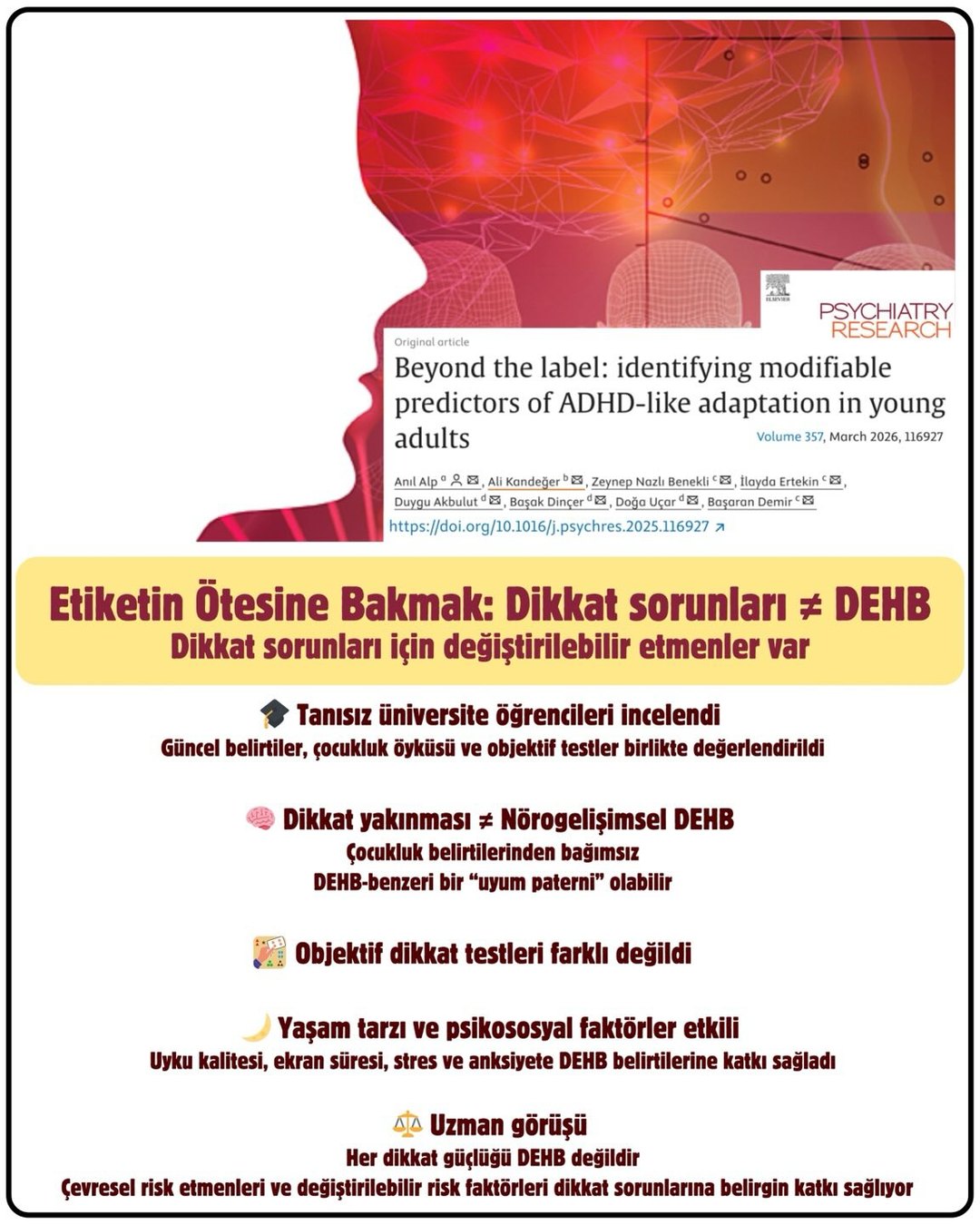
Beyond the label: attention problems ≠ ADHD
Modifiable factors also play a part in attention problems.
- Undiagnosed university students
- Current symptoms, childhood history and objective tests were assessed together.
- An attention complaint ≠ neurodevelopmental ADHD
- There may be an ADHD-like “adaptation pattern” that is independent of childhood symptoms. Objective attention tests did not differ between groups.
- Lifestyle and psychosocial factors
- Sleep quality, screen time, stress and anxiety contributed to ADHD symptoms.
Source: Alp et al. Psychiatry Res, 2026
Why diagnosing and treating ADHD matters
Two large cohort studies in JAMA Network journals
- The most common neurodevelopmental disorder
- Genetic factors are strong, and it involves difficulties with executive functions. It more often comes with mental, physical and social problems.
- Treatment lowers real-life risks
- Substance use, self-harm, traffic crashes and criminal behaviour decrease.
- Treatment lowers mortality
- Over two years of follow-up, all-cause mortality was lower, especially deaths from unnatural causes such as suicide, accidents and poisoning.
Source: Li et al. JAMA, 2024; Li et al. JAMA Psychiatry, 2025
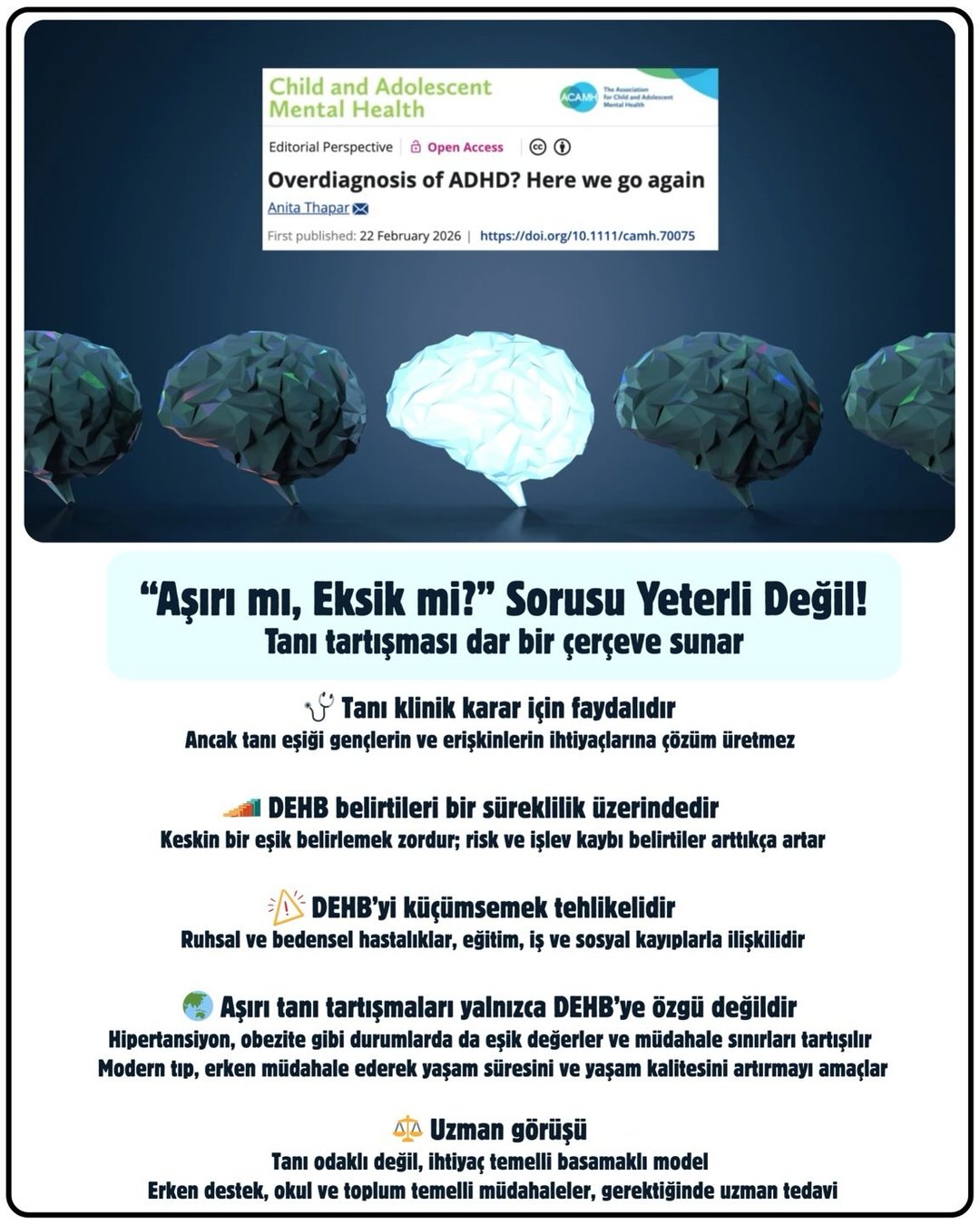
“Over or under?” is not the right question
The debate about diagnosis offers a narrow frame.
- Diagnosis helps clinical decisions
- But a diagnostic threshold alone does not meet the needs of young people and adults.
- Symptoms lie on a continuum
- A sharp cut-off is hard to set; risk and impairment rise as symptoms increase.
- Downplaying ADHD is dangerous
- It is linked to mental and physical illness and to losses in education, work and social life.
- Overdiagnosis debates are not unique to ADHD
- Thresholds and treatment limits are debated for conditions such as hypertension and obesity too. Modern medicine aims to extend life and improve its quality through early intervention.
Topics
Adapted from an Instagram series (in Turkish). General information only; it does not replace a medical assessment.