Visual series
4 slides, in Turkish · visual summary
What challenges come up?
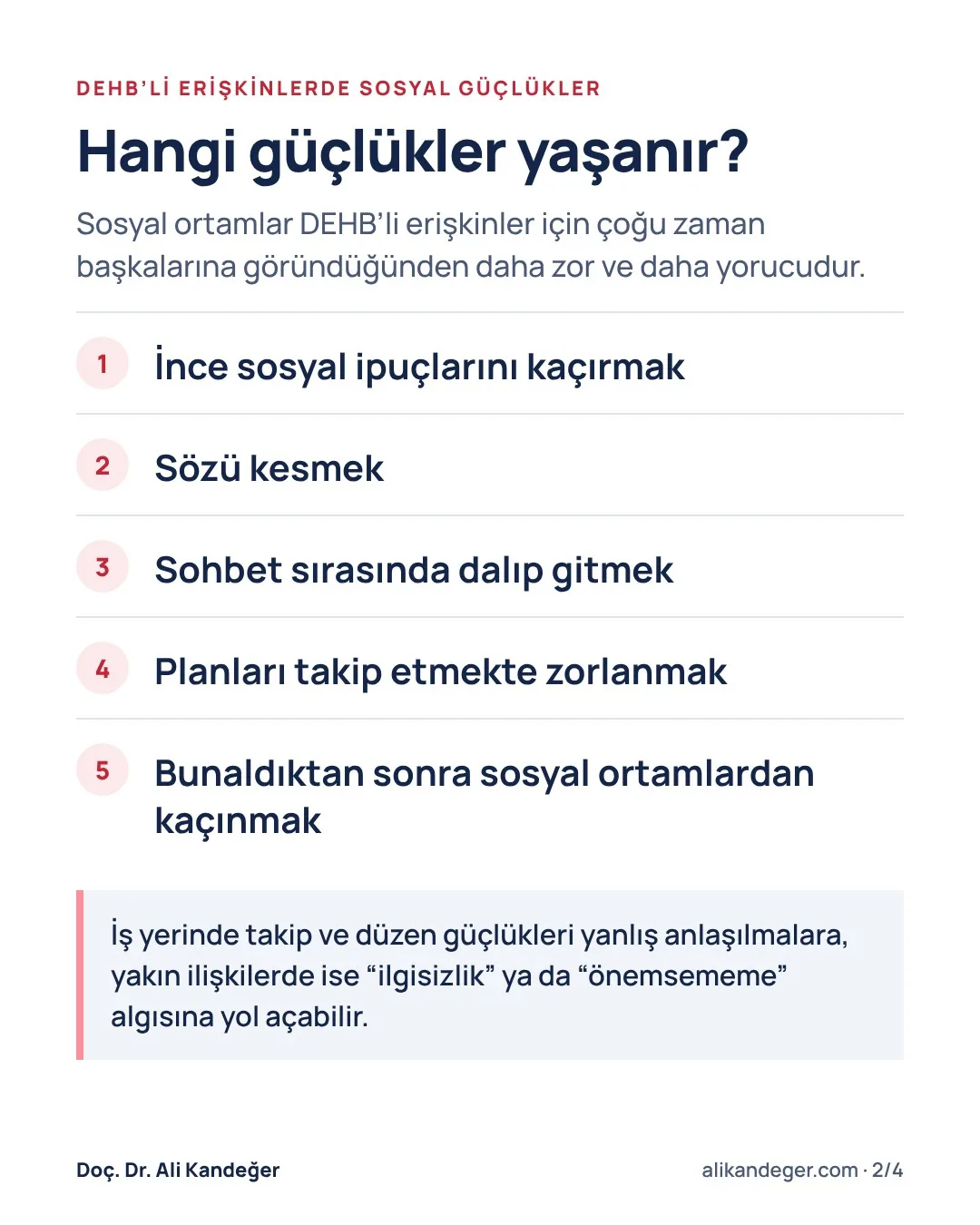
Adults with ADHD often report that social situations can feel harder to navigate, and require more effort, than they appear for others. Common challenges include:
- Missing subtle social cues
- Interrupting
- Drifting off during conversations
- Struggling to keep track of plans
- Avoiding social gatherings after feeling overwhelmed
At work, difficulties with follow-up or organization can lead to misunderstandings, while in close relationships these behaviors may be perceived as disinterest or lack of care.
Social cognition: reading emotions and perspectives
Research has shown that social cognition—the ability to recognize emotions, understand others’ perspectives, and respond appropriately—can be affected in ADHD. Compared with people without ADHD, adults may show small to moderate difficulties in tasks such as recognizing facial or vocal emotions (especially anger and fear) or understanding what others might be thinking or feeling. These difficulties tend to be less pronounced than in autism spectrum conditions and often tend to improve with age, suggesting that social cognition challenges in ADHD follow a different developmental pathway.
Source: Bora & Pantelis. Psychol Med, 2016; Bölte. Neurosci Biobehav Rev, 2025
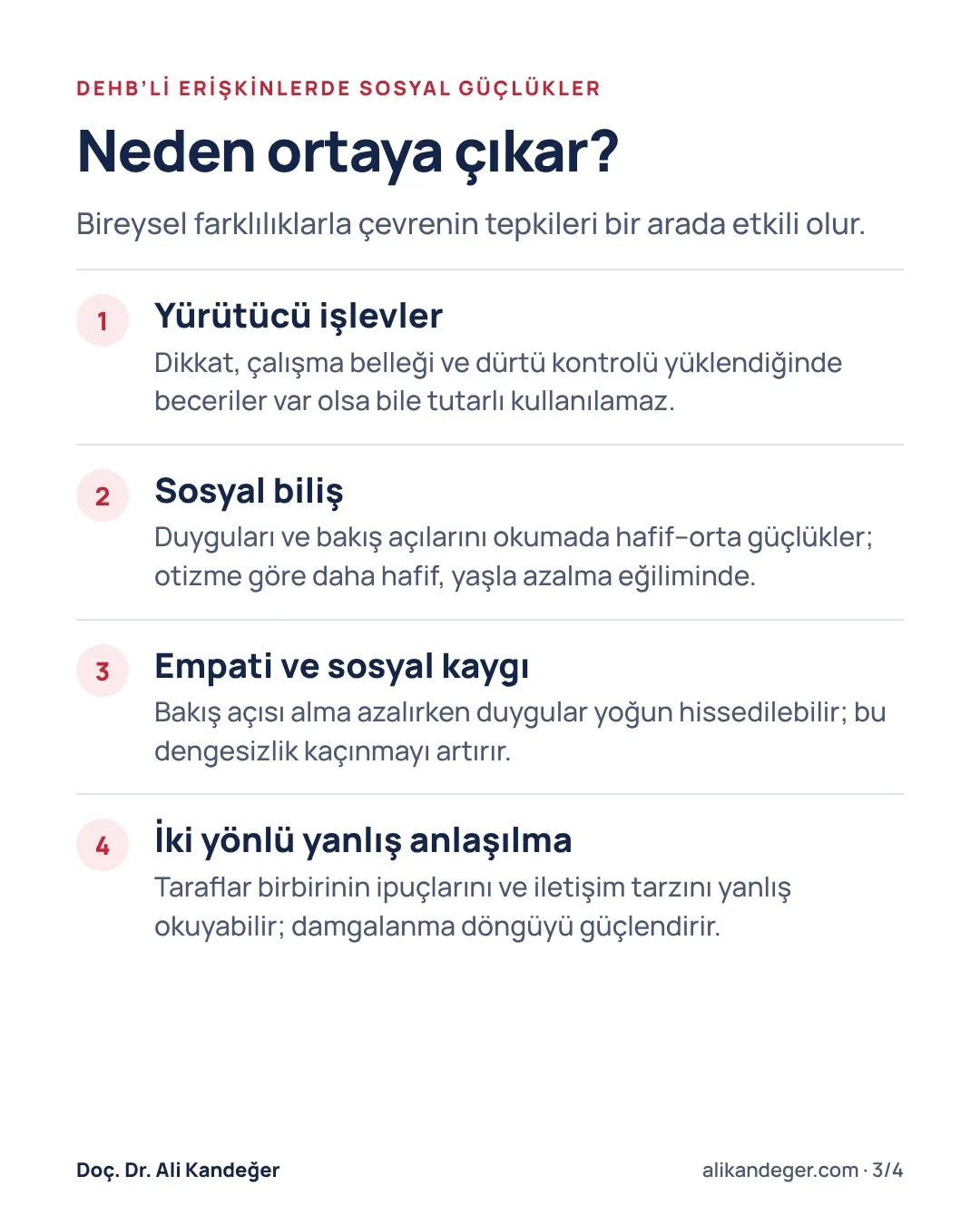
Executive functions, empathy and social anxiety
- Executive functioning
- Attention, working memory, and impulse control are central for keeping track of conversations and shifting perspectives. When these processes are overloaded, it becomes harder to use social skills consistently, even if the skills are there.
- Empathy differences and social anxiety
- Some studies suggest that adults with higher social anxiety may experience lower perspective-taking skills (cognitive empathy) while still feeling others’ emotions strongly (emotional empathy). This imbalance can make social situations feel overwhelming and increase avoidance behaviors.
Source: Pittelkow et al. J Anxiety Disord, 2021; Kandeğer et al. Acta Psychiatr Scand, 2026
Misunderstandings go both ways
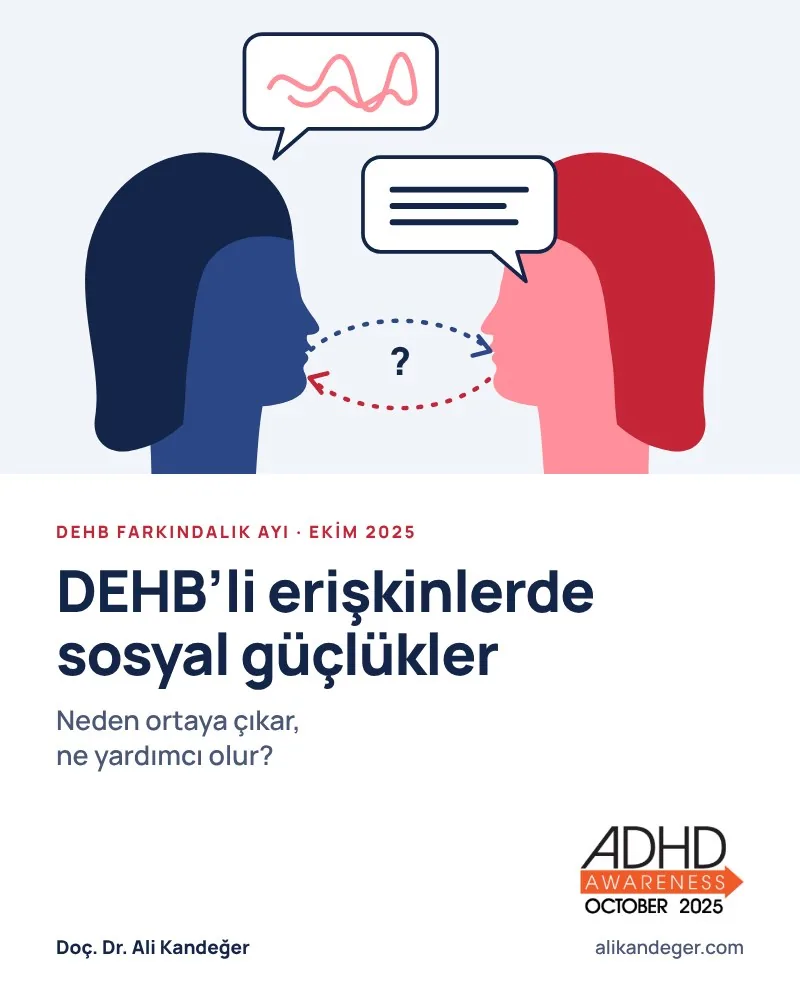
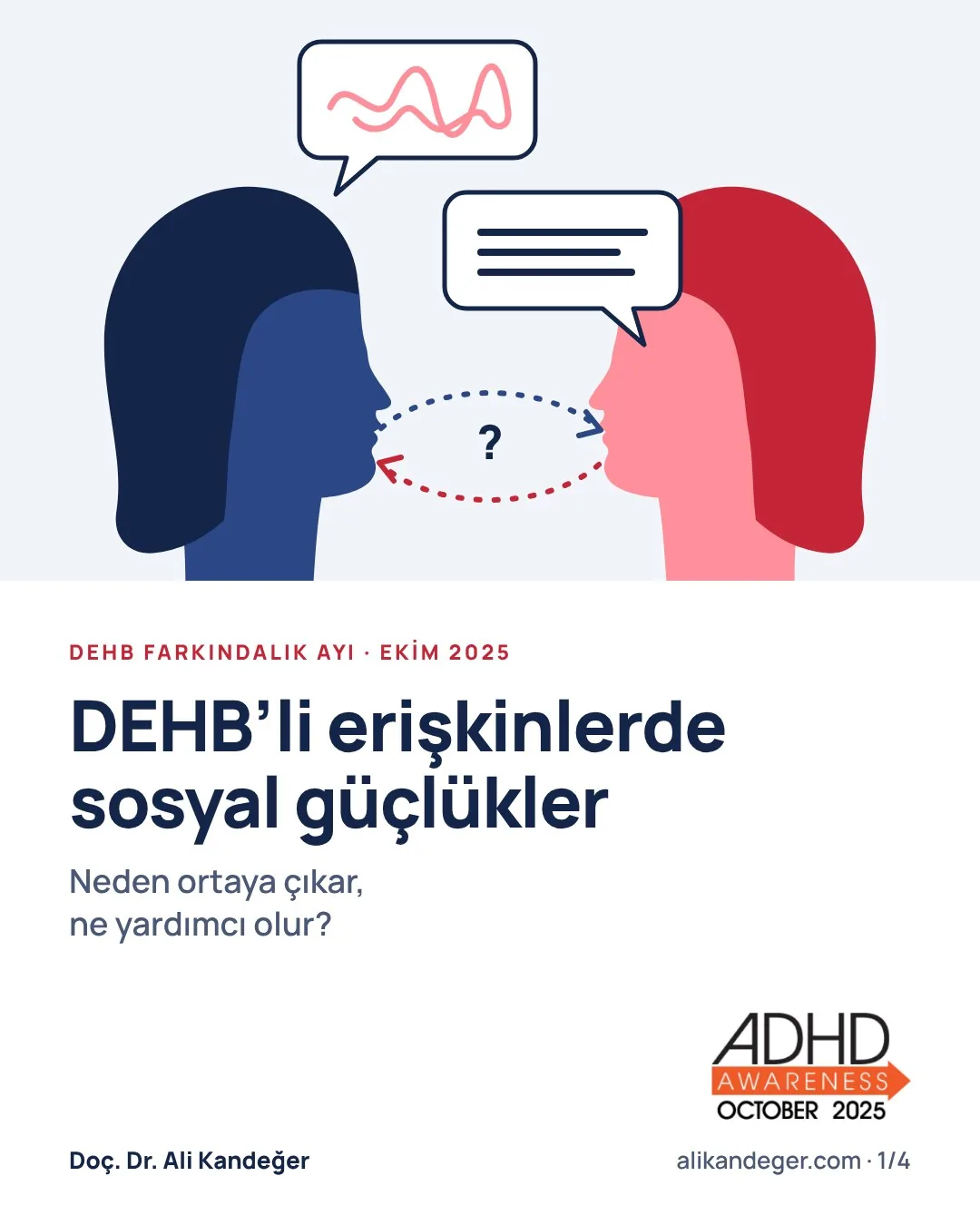
Social difficulties are not only about the individual. Studies show that misunderstandings often go both ways—people with ADHD may misread social cues from others, and neurotypical individuals may also misinterpret the communication style of someone with ADHD. Stigma and lack of awareness can make this cycle worse, while supportive environments and simple adjustments often reduce barriers.
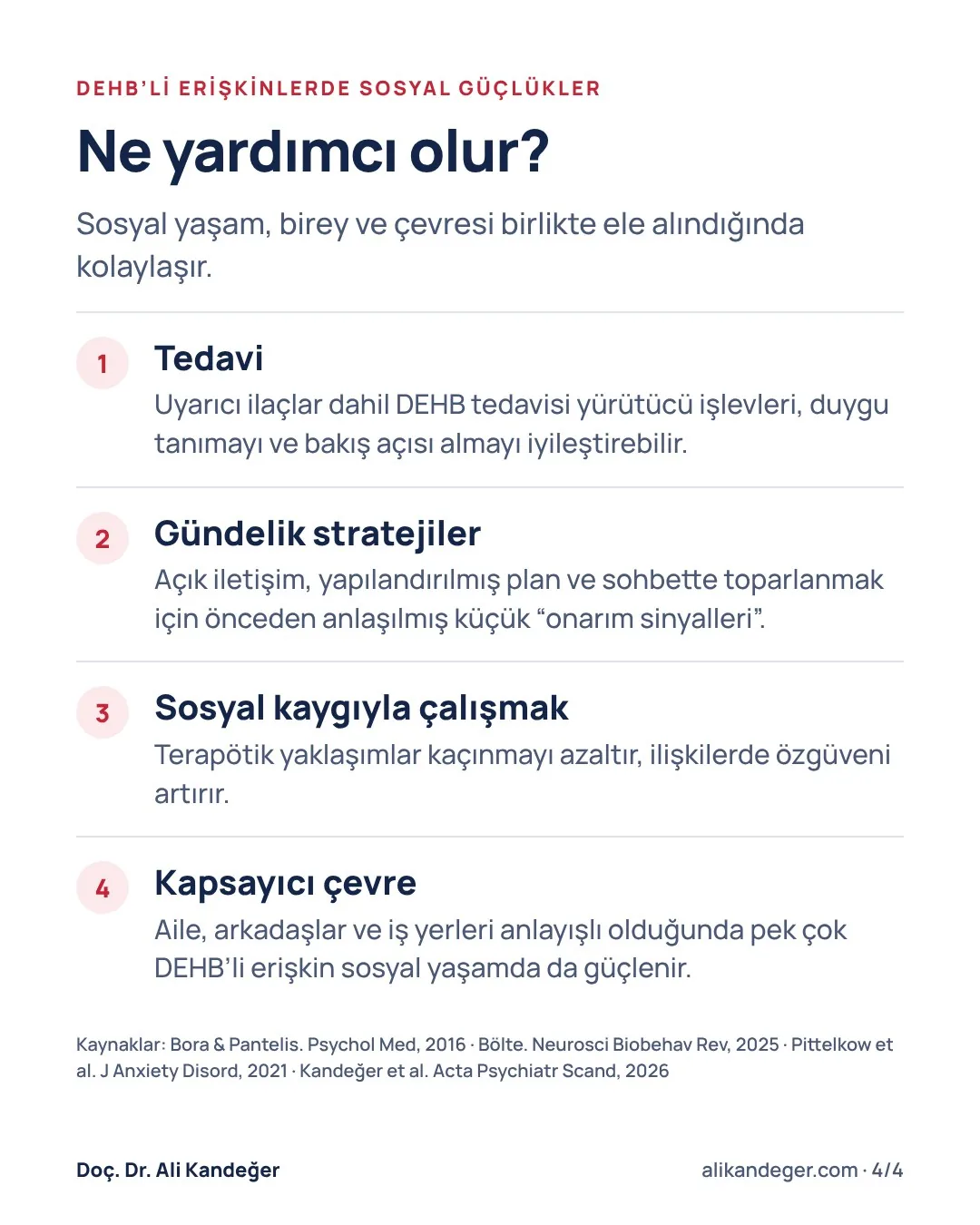
What helps
- ADHD treatment, including stimulant medication, can improve executive functions, as well as emotion recognition and perspective-taking.
- Social-skills interventions and everyday strategies—such as using clear communication, structured planning, and agreed “repair signals” (small cues to get back on track in conversations)—may also make interactions flow more smoothly.
- Addressing social anxiety through therapeutic approaches can further reduce avoidance and help adults with ADHD feel more confident in relationships.
First published in English for ADHD Awareness Month 2025. General information only; it does not replace a medical assessment.